
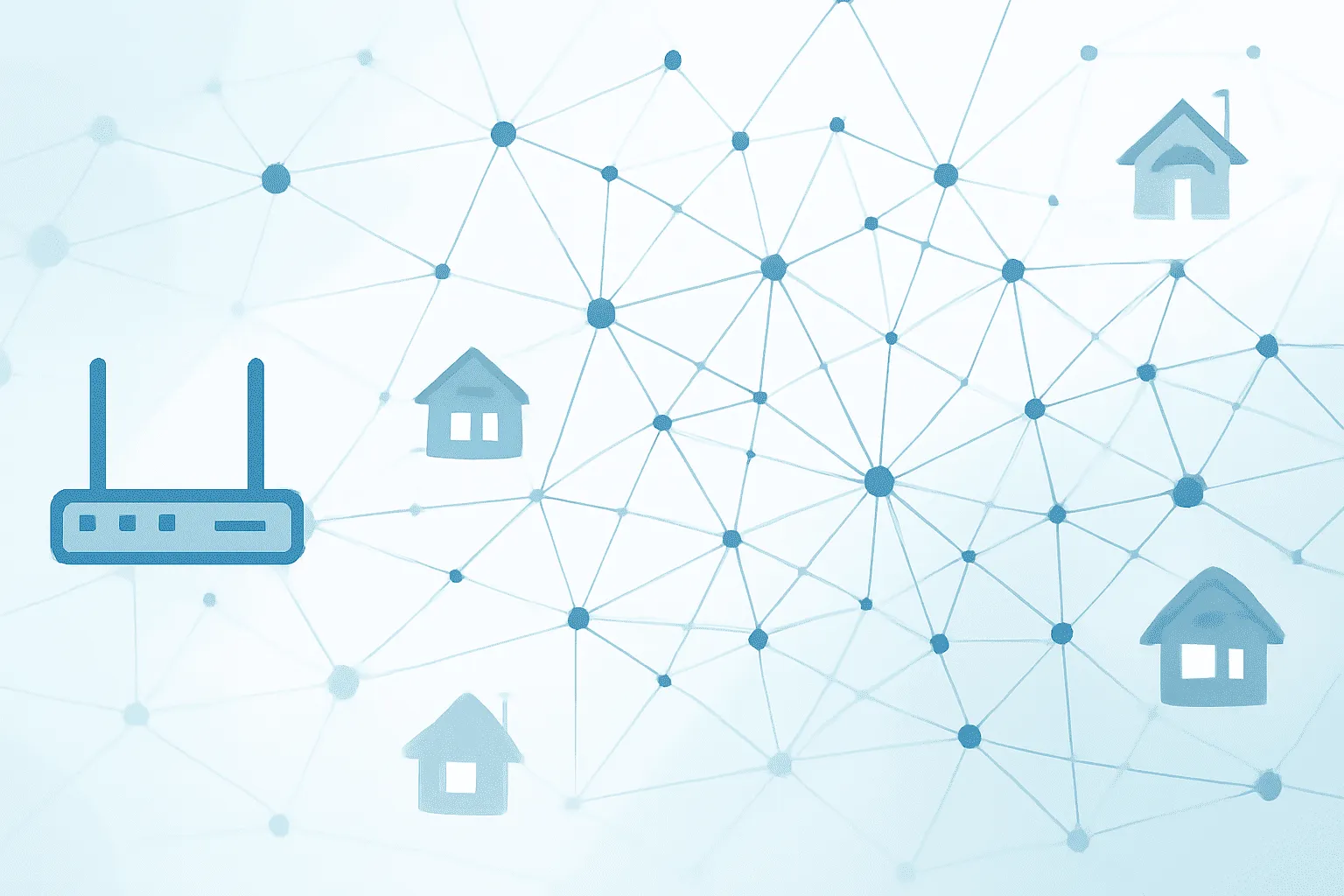
What are residential proxies and what are static residential proxies? Residential proxies route requests through IP addresses assigned by ISPs to real devices in real homes, so your traffic appears to originate from genuine users in specific physical locations rather than from a server. This credibility reduces blocks on target websites and helps with tasks that require accurate geolocation, compliance with regional experiences, and resilient access patterns.
Ready to buy? Jump to our shortlist of the best static residential proxies in 2026 — pricing, strengths, and who each provider fits.
Quick definitions
- Residential proxy: An intermediary that uses a residential IP address assigned by an ISP to a household device, so requests look like normal internet traffic from real IP addresses tied to precise physical locations.
- Static residential proxy (often called ISP proxy): A residential IP that stays the same over time, ideal when a stable identity and location are required for logins, payments, dashboards, or to manage multiple accounts.
- Rotating residential proxy: A setup that pulls from a proxy pool and changes the residential IP per request or on an interval, distributing internet traffic and reducing blocks during large‑scale public data collection, price monitoring, web scraping, and ad verification.
How residential proxies work
A residential proxy network sits between your client and target websites, forwarding requests so the destination sees the proxy's residential IP address—not your original IP. Providers maintain large proxy pools across many cities and countries, enabling testing in geo‑restricted regions and city‑level checks with real residential IPs. Rotation can change the exit IP each request, while "sticky" sessions temporarily keep the same IP to preserve cookies during multi‑step flows. Most services support HTTP/HTTPS and the SOCKS5 protocol to handle a broader range of application traffic.
If you prefer a metaphor: think of the backconnect gateway as an IP traffic dispatcher—it assigns a suitable residential IP from the pool so your request blends in smoothly without unnecessary turbulence.
Static vs. rotating residential proxies
- Static residential (ISP) proxies: Fixed residential IP addresses that rarely change, providing stability and a consistent identity for session‑heavy tasks like logins, payments, analytics dashboards, and ongoing QA. They're well‑suited when platforms are sensitive to frequent IP changes.
- Rotating residential proxies: Exit IPs change per request or on a timer, ideal for large‑scale data collection, web crawling, and distributed testing. Rotation helps avoid rate limits and IP bans by spreading requests across many residential IPs that look like typical users.
Core benefits and when to use each
- Public data and data collection at scale: Rotating residential proxies distribute requests across the proxy pool to fetch public data more reliably while mimicking organic usage patterns.
- Web scraping and ad verification: View pages and creatives as real users would across many physical locations; rotation reveals geo‑specific variants and reduces the chance of verification tags being blocked.
- Geo‑restricted testing: Validate localized content, pricing, and SERPs by selecting residential IPs in specific cities or countries.
- Manage multiple accounts and session‑heavy tasks: Static residential IPs maintain a stable identity and consistent location to reduce friction with security systems that flag sudden IP changes.
Technical notes that matter in practice
- Protocols: Most providers offer HTTP/HTTPS and SOCKS5 protocol endpoints; SOCKS5 is useful for broader TCP‑level traffic and non‑HTTP applications.
- Rotation controls: Per‑request rotation maximizes scale; sticky sessions keep a residential IP address for minutes to complete logins, carts, or checkouts without mid‑flow IP flips.
- Performance trade‑offs: Static residential (ISP) IPs tend to offer higher stability and often better performance for long sessions, while rotating networks trade a bit of consistency for resilience and coverage at volume.
Buyer's checklist
- Sourcing transparency: Prefer providers that clearly explain how residential IPs are sourced and consented.
- Pool size and freshness: Larger, regularly refreshed proxy pools reduce repeated fingerprints and improve success on sensitive targets.
- Location accuracy: Verify city‑level geotargeting and geolocation quality when testing geo‑restricted experiences.
- Controls and telemetry: Look for rotation timing, sticky duration options, concurrency limits, protocol choices, and success metrics to tune internet traffic responsibly.
- Compliance stance: Ensure your use cases align with applicable laws and the terms of the target websites; proxies improve access but don't override legal or platform restrictions.
FAQs
Do residential proxies use real IP addresses?
Yes—residential proxies use IP addresses assigned by ISPs to household devices, which is why requests appear to come from genuine users in specific locations.
How do rotating residential proxies work?
A backconnect gateway selects an exit IP from a residential proxy pool per request or time window, with optional sticky sessions to maintain cookies and session continuity.
Are static residential proxies better than rotating ones?
It depends on the task: static provides consistent identity and location for session‑sensitive workflows, while rotating provides scale, diversity, and resilience for broad data collection and testing.
Is SOCKS5 necessary?
Not always. Use HTTP/HTTPS for standard web traffic and SOCKS5 when applications require broader protocol support or non‑HTTP routing.
In conclusion → Static is the sturdy passport you show at every checkpoint; rotating is the tour bus that drops you at a new landmark each stop—pick the ride that fits your itinerary.
Tags
Proxy & Web Scraping Research Team
The ProxyCorner editorial team researches, tests, and reviews residential, datacenter, mobile, and ISP proxy providers. Every review is backed by our standardized monthly benchmark suite — 10,000+ test requests per provider, 5-region speed measurements, and independent IP pool verification.
Reviews follow our published testing methodology, including affiliate disclosure and editorial independence standards.
Ready to Choose a Proxy Provider?
Explore our comprehensive directory of residential proxy providers and find the perfect match for your web scraping needs.
Browse Proxy Providers