
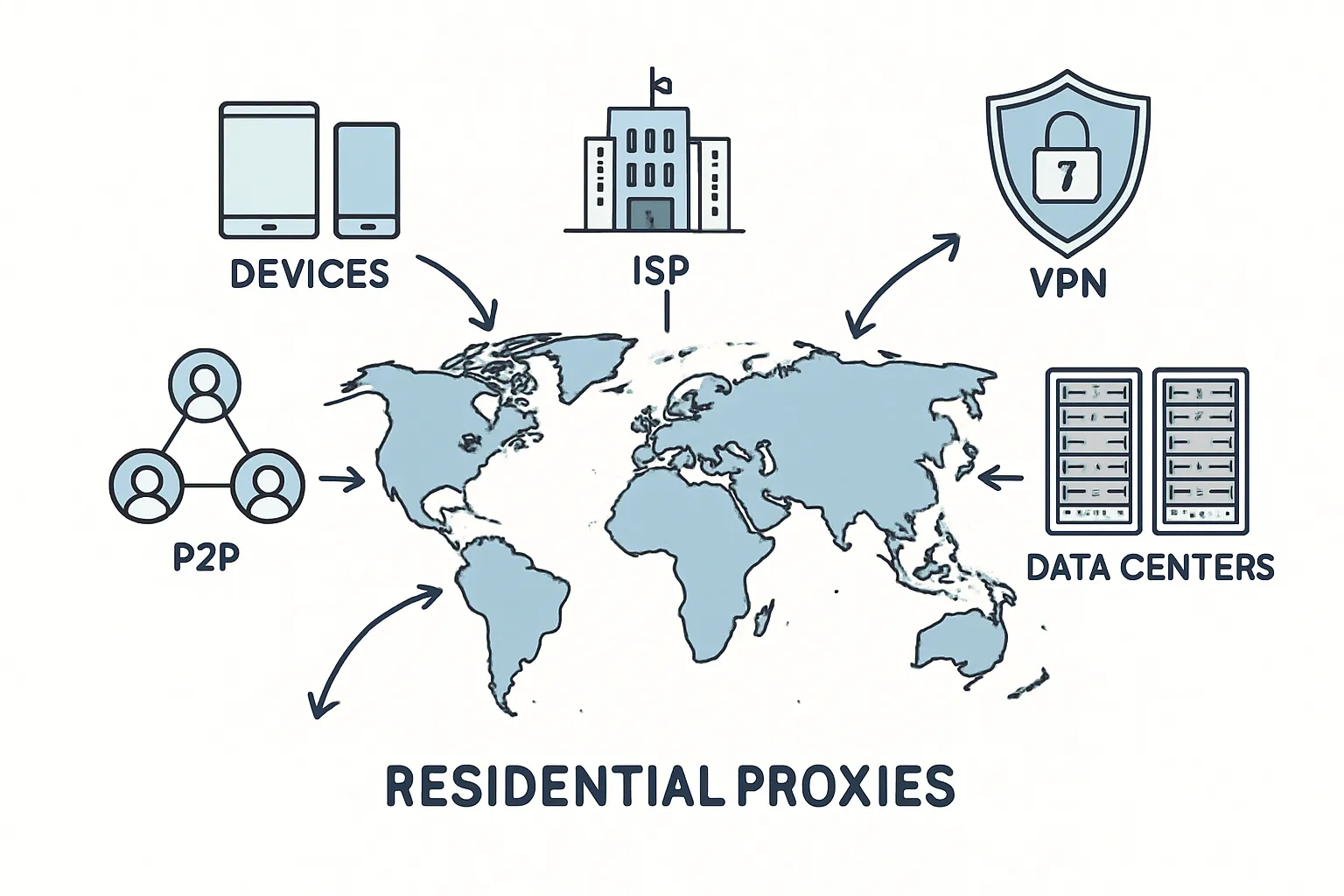
Where do residential proxies come from? So... people ask me all the time: "Where do residential proxies even come from?" Like, I swear this pops up in my inbox at least three times a week. Usually from folks doing web scraping, sneaker copping, or some kinda marketing automation. And honestly, I get it—kinda feels sketchy if you don't actually know the story behind them.
Look, here's the thing. Residential proxies aren't like magic. They're just real devices—laptops, phones, tablets—that already have legit IP addresses from their internet providers. Like, when you're on your home WiFi? That IP? That's what counts as "residential." Golden. Because websites trust it way more than a data center IP blasting 10,000 requests a minute from Ashburn, Virginia.
But where do proxy companies get them? That's the juicy bit.
So... most of the big providers (think Bright Data, Oxylabs, Smartproxy) actually source residential IPs through apps. You know those free VPNs or sketchy little utilities like a flashlight app or a "free mobile game" nobody's heard of? Yeah, some of those are built by companies that sneak network-sharing permissions into their terms. Basically—people "agree" (without really reading) to share a slice of their internet connection whenever they're online.
Pretty wild, right?
For example, Bright Data (formerly Luminati) was notorious for this back in the day with its Hola VPN. Users thought, "Cool, free VPN!" but what they were really doing was turning their laptop into a node in Bright Data's proxy network. Same thing happens with some mobile SDKs—companies bake their code into random apps, and boom—now they're harvesting IPs worldwide.
Here's the thing, not all of it is shady. I've seen people willingly opt into "bandwidth sharing programs." Providers like Peer2Profit or Honeygain pay regular folks a few bucks a month to share their idle connection. Like, my buddy tried Honeygain and earned something like $19 in three weeks. Not life-changing money, but hey, his Netflix bill got covered. Makes sense.
But... some companies? Man, they go full dark patterns. They bury it in fine print, so people are unknowingly selling access to their home internet. That's where the ethical question mark comes up. Drives me crazy when people shoot themselves in the foot by using providers with these shady setups—you don't want your scraper running on some grandma's WiFi in Poland without her even knowing.
Honestly, the most important thing? Knowing your provider's source. Oxylabs, for instance, makes a big deal about being GDPR-compliant, and yeah, their prices reflect that. Meanwhile, cut-rate proxy resellers on Telegram? I wouldn't touch those with a ten-foot pole. If someone's offering "unlimited residential proxies for $20," that's not a deal—that's a red flag.
So... where do residential proxies come from? Either:
Direct opt-in from users who agree to share bandwidth in exchange for money/freebies/gift cards.
Bundled SDKs in apps that install proxy-sharing software. Sometimes sketchy. Sometimes disclosed.
ISP partnerships—this is rarer, but some premium networks (like NetNut claims) actually negotiate with internet service providers for traffic routing. Big boy stuff.
At the end of the day—I'm not saying residential proxies are bad. They're insanely useful. I use them for scraping e-com sites like Amazon and Walmart all the time. But knowing whether your IP pool comes from happy participants or accidental victims? That's what separates "I can sleep at night" from "ugh, I might be running on stolen bandwidth."
And hey, if you're buying proxies, just ask the sales rep straight-up: "Where are these IPs sourced from?" If they dodge the question, you've got your answer.
Because look, nobody wants their scraping gig propped up on someone else's Netflix binge.
Tags
Proxy & Web Scraping Research Team
The ProxyCorner editorial team researches, tests, and reviews residential, datacenter, mobile, and ISP proxy providers. Every review is backed by our standardized monthly benchmark suite — 10,000+ test requests per provider, 5-region speed measurements, and independent IP pool verification.
Reviews follow our published testing methodology, including affiliate disclosure and editorial independence standards.
Ready to Choose a Proxy Provider?
Explore our comprehensive directory of residential proxy providers and find the perfect match for your web scraping needs.
Browse Proxy Providers